

Here, the day doesn't just change scenery; it seems to offer a new version of the island every hour: austere mountain scenery, humid forest scenery, sunny ocean views, and evening city views. Even before the trip, I realized that putting together such a smooth itinerary on my own would be challenging, so I looked at active formats through https://guidekin.com, where you can choose mountain trips, levada walks, 4x4 routes, dolphin watching, or wine tastings without trying to manually match roads, weather, and distances. Ultimately, my day in Madeira turned out exactly as I imagined: with a morning chill above the clouds, the scent of a wet laurel forest, a salty breeze by the ocean, and a late dinner in Funchal, when it feels like you've experienced several mini-journeys in a single day.
A morning that begins above the clouds
We had to leave early, before Funchal had fully awakened. Below, the city was soft and almost homely: occasional cars, closed shutters, asphalt damp from the night, the first people at the café. But as soon as the road began to climb the mountains, the island changed immediately. The streets disappeared, the houses were left somewhere behind, and beyond the windows appeared steep slopes, curves, and a light that gradually grew colder.
Pico do Arieiro greeted me not like a postcard, but as a world unto itself. First, there was the sun, bright and almost harsh, as if the day had already begun long ago. Then, fog slowly drifted from behind the slope, and within minutes, the road, the cars, and the people around me began to dissolve in a white shroud. I stood at the observation deck, watching the peaks appear and disappear, and for the first time in a long time, I felt a sense of complete silence. Not the silence where nothing happens, but the silence where everything is too big to speak of.
Madeira, in the mountains, doesn't feel like a resort island. There's no sense of beach relaxation here. There's wind, rock, clouds, and sudden temperature changes. You can set out in Funchal in the morning in light clothing, and an hour later you're standing there in a jacket, wondering how quickly the weather can change all your plans. The sun would sometimes beat directly into your face, then disappear so abruptly, as if someone had turned off the lights. And that was the first contrast of the day: the island showed that it wasn't going to be comfortable and predictable, but it was going to be authentic.
The road where the weather changes faster than the mood
After the mountains, you understand especially clearly why in Madeira it's not just the destination that matters, but the road itself. Distances look short on the map, but in reality, the island lives vertically. You're constantly ascending, descending, diving into tunnels, emerging onto cliffs, finding yourself back in the green, and then suddenly the ocean is in view.
At some point, the sun returned, and it seemed the fog had been left behind. But after just a few kilometers, the road vanished into a gray, damp patch. The windows were covered in fine droplets, the trees grew darker, the air thicker, and the surrounding slopes seemed to draw closer. This wasn't bad weather, but simply a different Madeira. On the island, you quickly stop dividing a day into "good" and "bad" based on the forecast. Here, fog can intensify the view, rain can intensify the scent of the forest, and a brief break in the clouds is more precious than any steady sun.
I liked that the journey didn't feel like a race. Yes, the route was packed, but it didn't turn into a race against the clock. This is especially important on Madeira, where you constantly want to stop: look at the valley, photograph the clouds, or simply get out and breathe in the air, which in just ten minutes has become completely different. At that moment, I finally realized that the island can't be "completed" like a list of attractions. It can only be experienced in chunks, each time slightly differently.
Levada and the humid forest, where time slows down
After the mountains, the levada felt like an almost intimate part of the island. While Pico do Arieiro overwhelms with its scale, the walk along the water works differently: it doesn't strike you immediately, but gradually draws you in. A narrow path, a canal with running water, damp stones, roots, moss, leaves glistening after the fog, and a forest where everything seems alive.
The laurel forest in Madeira isn't your typical green space for a stroll. It's damp, dense, a bit magical, and even gloomy in places. The air there is heavier than by the ocean, but in a good way: it smells of earth, leaves, water, and old bark. Sometimes the trail is level, sometimes it narrows, sometimes it opens up onto the slope, and you can see clouds clinging to the mountains. You don't want to rush here, because the levada itself seems to set a different rhythm.
As I walked, I thought I'd stood above the clouds this morning, and now I was almost within them. It's a strange sensation: in a matter of hours, the island transports you from a space of wind and stone to a space of water and greenery. In the mountains, you want to gaze into the distance, and in the forest, you notice details: droplets on leaves, dark rock walls, thin trickles of water, damp railings, the sound of footsteps on wet earth. At this moment, Madeira becomes not spectacular, but profound.
What I remember most was how quickly the light changed. Sometimes the forest seemed almost dark, as if evening had arrived prematurely. Then the clouds would part, and the leaves would glow from within. Ten minutes later, everything would be shrouded in fog again. It wasn't annoying; on the contrary, it brought the walk to life. In Madeira, the weather doesn't interfere with the experience; it becomes part of the route itself.
Lunch by the ocean and a sudden shift to blue
After the damp levada, the descent to the ocean felt almost like a change of scenery. Just recently, there had been moss, fog, and cool air all around, but then the road led to the coast, and everything became brighter. The ocean shimmered blue, the cliffs looked sharp and dry, and the sun reminded us once again that this was, after all, an island in the Atlantic, not a northern mountainous region.
Porto Moniz greeted me with the sound of water and a sense of open space. The natural pools here look as if the ocean itself had decided to give us a gift, but without any unnecessary softness. Black volcanic rocks, clear water, lapping waves, salty spray, and the constant sound of the surf. After the forest, it was almost a physical release: my shoulders relaxed, the air felt lighter, and a simple desire filled my head to sit closer to the water and stay there for at least half an hour.
Lunch by the ocean in Madeira isn't just a pause between locations. It's a crucial part of the day, because the island is best understood through such stops. When you have a plate of fresh fish in front of you, the sound of the water nearby, and the feeling of the damp forest lingering on your skin, you begin to perceive the route not as a collection of beautiful places, but as a coherent story. In the morning, you were above the clouds, in the afternoon you walked a trail among the laurels, and now you look out over the Atlantic and realize how compact and yet incredibly diverse Madeira can be.
What's especially noticeable in Porto Moniz is that the ocean isn't just decorative. It's more than just a pretty backdrop for photos. It's powerful, loud, cold, and very much alive. Even without entering the water, it's enough to stand at the edge of the pools and watch the waves crash against the rocks. After the silence of the mountains and the humidity of the forest, this sound seems almost festive.
Why Madeira doesn't like rigid plans
This day clearly showed me that in Madeira, you can't plan your route too rigidly. Much depends on the weather, visibility, road conditions, and your own mood. You can plan for sunrise in the mountains, only to end up in fog. You can expect a cloudy day, only to find bright sunshine by the ocean. You can think the levada will be an easy stroll, only to end up hanging at every turn because the forest is too beautiful to walk quickly.
That's why I wouldn't recommend treating the island as a place where you absolutely must squeeze in everything. Madeira reveals itself much better when the itinerary is logical, yet leaves some room for breath. You don't have to try to see everything in the guidebook in one day. It's better to choose a contrasting itinerary, where each part of the day is different from the previous one. This way, the island doesn't become a kaleidoscope of random stops, but rather develops a rich, lasting impression.
I loved that an active day here doesn't necessarily mean total exhaustion. Yes, the road is long, there are many locations, the weather changes, and your legs feel the strain after the levada. But all this is compensated by the fact that the day is constantly changing. You don't have time to tire of one landscape because the island is already revealing the next. This is the great luxury of Madeira: it doesn't let you get bored, but it also doesn't require an endless rush if you plan your route wisely.
Return to Funchal and an evening taste of the island
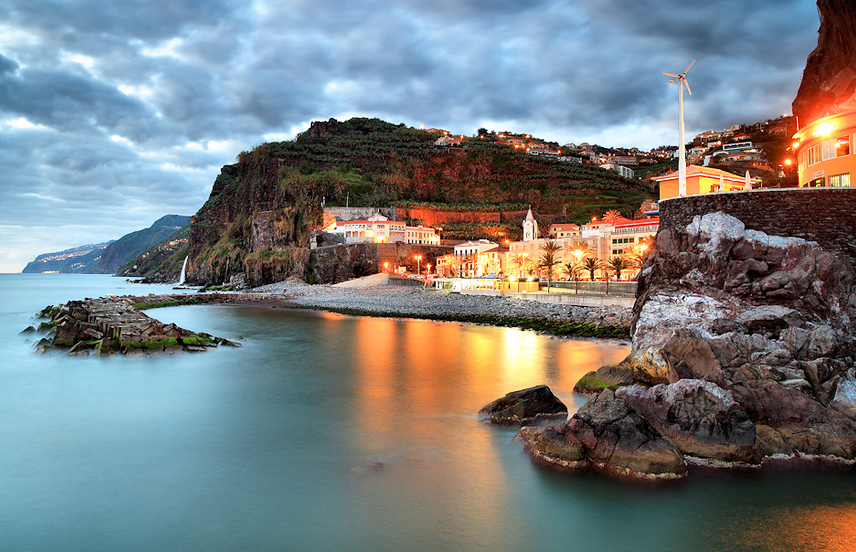
When the road returned to Funchal late in the afternoon, I felt as if I were returning not from a day trip, but from a small expedition. The city greeted me with warmth, soft light, and a completely different rhythm. After the mountains, fog, forest, and ocean waves, Funchal seemed calm, almost cozy. Lights were already coming on in the streets, people were sitting on terraces, and the smell of fried fish, garlic, and wine wafted from the restaurants.
Dinner with espada was the perfect ending to the day. Madeira's scimitar fish isn't just a local dish to be tried for the sake of it. After a journey around the island, it feels like a continuation of a story: a cold wind at altitude in the morning, a damp trail in the afternoon, then the ocean, and by evening, the ocean was already on your plate. There's something simple about the island's honesty. Everything you've seen during the day comes back to you through taste, smell, and conversation at the table.
I sat in Funchal, recalling the morning clouds at Pico do Arieiro and couldn't believe it had happened that same day. It felt like days had passed between the mountain viewpoint and the evening street, not just ten hours. Perhaps that's what captivates Madeira most. It stretches time not through the number of events, but through the power of contrasts.
An island that cannot be understood from one angle
Madeira doesn't reveal itself if you view it solely as a place for beautiful views. Yes, the views are stunning, sometimes even too cinematic. But the island's true magic lies in the transitions between them. From sun to fog. From mountains to forest. From a damp path to a vibrant ocean. From a wild coastline to evening Funchal. These transitions create the feeling that the island is alive, changeable, and a little unpredictable.
I arrived in Madeira expecting beautiful nature, but what I got was a day in which nature constantly changed its tone. Pico do Arieiro was austere and almost cosmic. Levada was quiet and humid. Porto Moniz was loud, salty, and open. Funchal was warm, delicious, and human. And all this not on separate trips, not in separate weeks, but in one day.
Perhaps this is why Madeira is so perfect for those who enjoy active travel but don't want a vacation that's simply a matter of moving from one point to another. Here you can walk, drive, see, experience, freeze in the mountains, bask by the ocean, listen to the rain in the forest, and end the day with a glass of wine in the city. And each time, it will be the same Madeira, but with a new face.
As I walked back through the streets of Funchal that evening, tired but completely satisfied, I caught myself thinking that the island hadn't become any clearer that day. On the contrary, it had become more complex, deeper, and more interesting. And that was the best thing that could have happened. Because Madeira isn't meant to be explained right away. It's meant to be pieced together gradually: through clouds, trails, waves, dinners, and those abrupt weather changes that initially surprise and then become the main memory of the trip.