
Understanding Website Design as the Foundation of a Strong Digital Presence
Website design is the creative and strategic process of developing the visual appearance, structure, functionality, and overall experience of a website. A well-designed website is more than an attractive collection of pages because it brings together layout, typography, imagery, navigation, content, interaction, accessibility, and performance into one connected experience. When these elements work together effectively, visitors can understand the purpose of a website quickly, move comfortably through its pages, and find the information they need without unnecessary confusion. Modern website design therefore requires a balance between creativity and practicality, ensuring that visual decisions support the goals of both the organization and its audience.
The Evolution of Website Design from Simple Pages to Interactive Experiences
Website design has changed dramatically since the early days of the internet. Earlier websites were often composed of simple text, basic images, limited colors, and straightforward links. As technology developed, designers gained access to more advanced layout systems, multimedia capabilities, animation, responsive techniques, and interactive components. Today, websites can provide highly personalized experiences with sophisticated interfaces that adapt to different devices and user behaviors. This evolution has transformed website design from a primarily paginas web visual discipline into a broader field involving user experience, technology, communication, psychology, branding, and business strategy.
Why Thoughtful Website Design Matters for Modern Organizations
A website often serves as one of the first points of contact between an organization and its audience. Visitors may form an opinion about a business, institution, service, or personal brand within moments of arriving on a website. A thoughtful design can create confidence by presenting information clearly and professionally, while an outdated or confusing interface can make visitors leave before discovering what the website offers. Good design establishes a visual identity, communicates credibility, supports navigation, and creates a consistent experience across different pages. It can also make complicated information easier to understand by organizing content into logical sections and presenting important ideas in an accessible way.
Creating a Clear Visual Identity That Reflects the Purpose of a Website
Visual identity is an important part of website design because it gives a website a recognizable character. Colors, typography, imagery, icons, spacing, shapes, and graphic elements can all contribute to the personality of a digital experience. A professional website should use these elements intentionally rather than combining visual styles without a clear reason. The selected design language should reflect the purpose of the website and create consistency throughout the interface. A technology company may use a clean and modern visual system, while an artistic portfolio may use expressive layouts and imagery. The goal is not simply to make a website look attractive but to create a visual environment that supports communication and strengthens recognition.
Building Website Layouts That Guide Visitors Naturally Through Content
Layout determines how information is arranged on a page and how visitors visually move from one element to another. An effective layout establishes relationships between headings, paragraphs, images, buttons, menus, cards, forms, and other components. Designers often use alignment, spacing, scale, contrast, and visual hierarchy to guide attention. Important information should be easy to identify, while secondary information can occupy less visual emphasis. When a layout is carefully structured, visitors can understand the page without having to consciously figure out where everything belongs. Good layout design creates a natural reading path and makes the entire website feel organized.
Using Visual Hierarchy to Make Important Information Easier to Discover
Visual hierarchy allows designers to communicate importance through differences in size, position, weight, color, spacing, and contrast. A large heading may immediately introduce the main subject, while smaller headings divide the content into meaningful sections. Buttons can be emphasized through shape and contrast when they represent important actions. Images can establish emotional context, while supporting text provides additional explanation. Without hierarchy, every element may compete for attention, making the page feel overwhelming. Strong website design uses hierarchy to answer an important question for visitors: what should I notice first, what should I understand next, and what should I do after that?
Choosing Typography That Improves Both Readability and Personality
Typography has a major influence on how a website feels and how comfortably visitors can read its content. Font selection should consider readability, character, spacing, size, weight, and compatibility with different screens. Headings can provide personality and establish structure, while body text should remain comfortable for longer reading. Designers also need to consider line length, paragraph spacing, and contrast. A sophisticated typographic system can make a website feel polished without requiring excessive decoration. The best typography usually supports the content quietly rather than becoming a distraction.
Designing Responsive Websites for Phones, Tablets, Laptops, and Large Screens
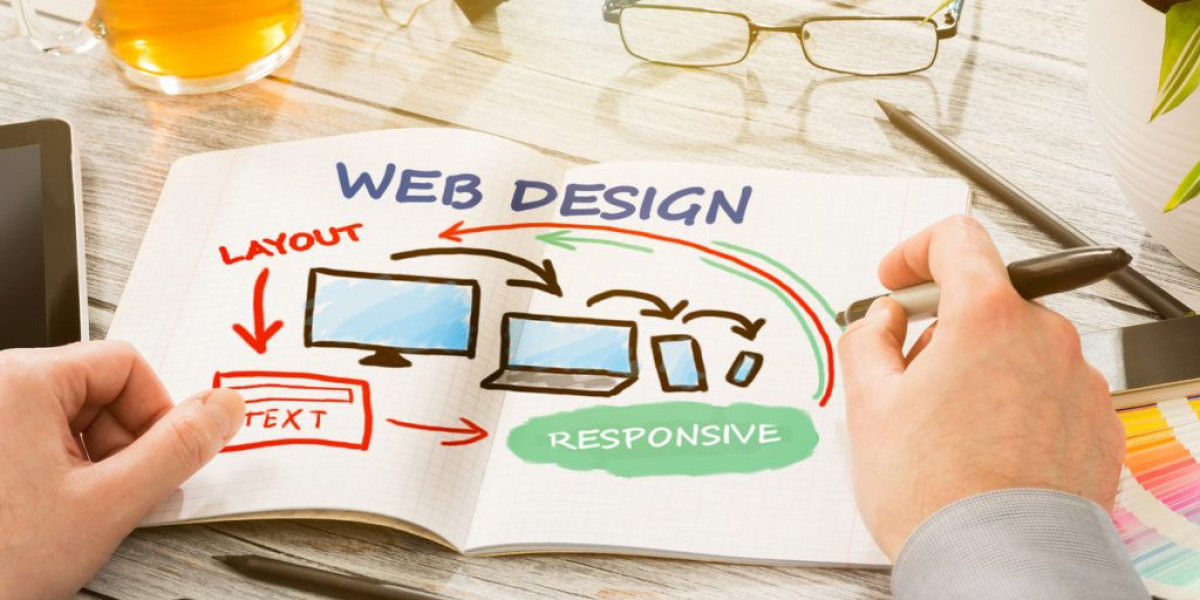
Responsive design has become essential because people access websites through many different screen sizes. A layout that looks excellent on a desktop may become difficult to use on a smaller screen if elements do not adapt properly. Responsive website design allows content, images, navigation, columns, and interactive components to adjust according to available space. Mobile visitors should not have to zoom excessively, scroll sideways, or struggle with tiny controls. A successful responsive design preserves the core purpose of the interface while adapting its structure to provide comfortable experiences across different devices.
Creating Navigation Systems That Help Visitors Find Their Way Without Confusion
Navigation is one of the most important functional elements of website design. Visitors should be able to understand where they are, where they can go, and how to return to previous sections. Menus should be organized according to the importance and relationships between pages. Navigation labels should be understandable and consistent. Complex websites may require multiple levels of navigation, search functionality, filters, or carefully designed category systems. Regardless of complexity, the central principle remains the same: visitors should not have to fight the interface to locate useful information.
Designing Homepage Experiences That Communicate Value Immediately
The homepage often introduces visitors to the identity and purpose of a website. It should communicate the central message quickly while providing clear paths toward important areas of the site. A strong homepage can combine a compelling introduction, supportive imagery, concise explanations, meaningful calls to action, and carefully organized sections. The homepage does not need to contain everything, because its purpose is to establish context and encourage visitors to continue exploring. Effective homepage design creates a strong first impression while giving users a clear understanding of what the website can offer them.
Developing Landing Pages That Focus Attention on a Specific Goal
Landing pages are designed around focused objectives and therefore require a different approach from general website pages. A landing page may introduce a service, explain an offer, encourage registration, present an event, or guide visitors toward another specific action. Its structure should reduce unnecessary distractions and keep supporting information relevant to the main purpose. Headlines, imagery, explanatory content, forms, and action elements should work together as one coherent experience. A successful landing page makes the intended next step easy to understand without overwhelming the visitor with unrelated choices.
Using Images and Graphics to Strengthen Communication Rather Than Decoration
Images can communicate ideas quickly and create emotional connections that text alone may not achieve. However, visual content should have a meaningful relationship with the surrounding message. Poorly selected images can create confusion or make a website feel generic. Designers should consider composition, relevance, quality, proportions, and consistency when incorporating visual assets. Illustrations, diagrams, icons, photography, and other graphics can also explain complex concepts and break large areas of text into more approachable sections. Visual content is most effective when it contributes to understanding rather than simply filling empty space.
Creating Consistent Design Systems Across Every Page and Component
Consistency helps visitors understand how a website works. Buttons should behave and appear consistently, headings should follow a recognizable hierarchy, spacing should follow a coherent pattern, and navigation should remain predictable. Design systems help maintain this consistency by defining reusable visual and functional components. When a website grows, a design system can make future updates easier because new pages can be created using established patterns. Consistency does not mean every page must look identical. Instead, it means that the same design language remains recognizable throughout the entire experience.
Understanding the Difference Between Visual Beauty and Practical Usability
A website can be visually impressive while still being difficult to use. Attractive animations, unusual layouts, dramatic imagery, and creative typography may capture attention, but they should not interfere with essential tasks. Usability focuses on whether visitors can understand and interact with a website effectively. Designers need to consider readability, navigation, interaction, feedback, accessibility, and clarity alongside visual appearance. The strongest designs combine beauty with practicality so that the interface feels enjoyable without becoming frustrating.
Designing Buttons and Interactive Elements That Communicate Their Purpose Clearly
Buttons, links, forms, menus, tabs, cards, and other interactive elements should provide clear visual signals. Visitors should be able to recognize what can be clicked, tapped, selected, or expanded. Button labels should describe the action rather than create uncertainty. Appropriate spacing between interactive elements is especially important on touch devices. Visual feedback can also reassure visitors that their interaction has been recognized. These small details contribute significantly to the overall quality of a website because they make the interface feel responsive and understandable.
Using White Space to Create Balance, Focus, and Comfortable Reading Experiences
White space, sometimes called negative space, is an essential component of modern website design. It provides breathing room between different elements and prevents pages from becoming visually crowded. Designers can use spacing to separate sections, emphasize important content, improve readability, and establish rhythm. White space does not necessarily mean the area must be completely white. It refers more broadly to intentionally unused visual space. A carefully balanced interface often feels more professional because each element has enough room to be understood independently.
Improving Website Accessibility Through Inclusive Design Decisions
Accessibility ensures that websites can be used by people with different abilities and circumstances. Inclusive design considers readable text, sufficient contrast, keyboard interaction, understandable labels, meaningful structure, alternative descriptions for relevant images, and clear navigation. Accessibility is not simply an additional feature added at the end of a project. It should influence design decisions from the beginning. When websites are created with accessibility in mind, they often become easier for everyone to use, including visitors using mobile devices, older users, people with temporary limitations, and people navigating challenging environments.
Balancing Animation and Motion With User Comfort and Interface Clarity
Animation can make a website feel dynamic and engaging. Subtle transitions can help explain relationships between elements, indicate changes, and provide feedback after interactions. However, excessive motion can become distracting and may make navigation uncomfortable. Designers should use animation with a clear purpose rather than adding movement simply because modern websites often contain motion. Timing, speed, repetition, and context all matter. Thoughtful motion supports the experience, while unnecessary motion competes with the content.
Designing Forms That Encourage Accurate and Comfortable User Interaction
Forms are often necessary for communication, registration, inquiries, applications, subscriptions, and other activities. A poorly designed form can create frustration if it contains unclear labels, excessive fields, confusing errors, or difficult controls. Good form design explains what information is required and provides helpful feedback when something needs correction. Fields should be logically organized and easy to complete on both desktop and mobile screens. Reducing unnecessary complexity can make forms significantly more approachable and improve the overall user experience.
Understanding the Role of Content in Successful Website Design
Design and content cannot be treated as completely separate disciplines. A beautiful interface cannot compensate for confusing, inaccurate, or poorly organized information. Website content should be clear, useful, relevant, and structured according to the needs of its audience. Designers need to understand the content before creating layouts because the amount and type of information can influence page structure. When content and design are developed together, the resulting website communicates more effectively and feels more coherent.
Creating Content Structures That Support Scanning and Deep Reading
Online visitors often scan pages before deciding whether to read them carefully. Clear headings, short paragraphs, visual breaks, meaningful emphasis, and logical sections help visitors understand what a page contains. At the same time, some visitors may want detailed information, so websites should also support deeper reading. Strong content structure serves both behaviors by providing quick orientation while preserving enough detail for people who want comprehensive explanations. This balance is especially valuable for educational, professional, technical, and informational websites.
Planning User Journeys Before Designing Individual Screens
User experience begins before individual pages are designed. Designers should consider what visitors are trying to accomplish and the sequence of actions they may take. A user journey might begin with discovering a website, continue through learning about an offering, and eventually lead toward contacting an organization or completing another meaningful action. Mapping these journeys can reveal unnecessary steps, confusing transitions, and missing information. Designing around user journeys helps ensure that individual pages contribute to a larger experience rather than functioning as isolated screens.
Using Research to Understand the People Who Will Actually Use a Website
Effective website design should be based on an understanding of its audience. Research can reveal what visitors expect, what questions they have, what problems they are trying to solve, and what language they naturally use. Designers can use this information to make better decisions about navigation, content structure, visual presentation, and functionality. Audience understanding also prevents designers from relying entirely on personal assumptions. A website should ultimately serve its users rather than simply reflect the preferences of the person who created it.
Building Trust Through Professional Presentation and Transparent Communication
Trust is especially important when visitors are considering a business, organization, service, or professional. A trustworthy website presents information clearly and avoids confusing design patterns. Contact details, company information, policies, service descriptions, and other important information should be easy to locate when relevant. Professional presentation also includes consistency, accurate content, thoughtful typography, appropriate imagery, and reliable functionality. Trust develops through many small signals rather than through one visual element.
Designing Websites That Feel Fast, Lightweight, and Responsive
Performance is closely connected to user experience. Visitors generally expect pages and interactions to respond quickly, especially when using mobile devices or slower connections. Large images, unnecessary scripts, excessive animation, and inefficient implementation can negatively affect the experience. Designers and developers should therefore consider performance during the design process rather than treating it as an issue to solve later. A visually refined interface is more effective when it also responds smoothly to user actions.
Considering Mobile Experience as a Primary Design Environment
Mobile design should not be treated as a smaller version of desktop design. Smaller screens create different challenges and require careful prioritization. Navigation may need to become more compact, content may need to be reorganized, and interactive controls must remain comfortable to use with touch. Designers should consider how users hold their devices, how they scroll, and how quickly they need to understand information. Mobile-first thinking can encourage designers to focus on essential content and eliminate unnecessary complexity.
Developing Strong Visual Relationships Between Sections and Components
A well-designed website creates relationships between different sections so visitors understand how the page is organized. Similar elements should look related, while different functions should be visually distinguishable. Repeated patterns create familiarity and help users predict what will happen next. Designers can establish relationships through spacing, alignment, typography, color, shape, and component structure. These relationships make a website easier to understand because visitors do not have to learn a completely new visual language on every page.
Making Website Design Adaptable for Future Growth and New Content
A website rarely remains unchanged after launch. New services, articles, products, features, announcements, and pages may be added over time. A flexible design system allows the website to grow without becoming visually inconsistent. Designers should therefore consider future content when creating page structures and reusable components. A scalable design can accommodate change while maintaining its original identity. Planning for growth can also reduce the need for major redesigns whenever new requirements appear.
The Importance of Testing Website Designs Before Final Implementation
Testing helps reveal problems that may not be obvious during the design process. A designer may understand an interface because they created it, while a new visitor may interpret it differently. Testing with real users can reveal confusing navigation, unclear labels, difficult forms, unexpected interactions, and content that is overlooked. Feedback should be treated as useful evidence rather than criticism. Iterative testing allows designers to improve the experience before problems become expensive or difficult to correct.
Learning From User Behavior Without Losing the Human Side of Design
Data can provide valuable information about how visitors interact with a website. Designers can study which pages receive attention, where visitors encounter difficulties, and which areas may need improvement. However, numerical information should not completely replace human understanding. A data point can show that users leave a page, but research and observation may help explain why. Combining behavioral information with qualitative feedback creates a stronger foundation for design decisions.
Creating Memorable Experiences Through Meaningful Design Details
Memorable website design does not always require dramatic visual effects. Sometimes a carefully chosen illustration, thoughtful interaction, distinctive typography, or elegant transition can make an experience feel special. Memorable design often comes from consistency and attention to detail. When small elements support a larger identity, visitors may develop a stronger connection with the website. The objective should not be to surprise users constantly but to create an experience that feels intentional and recognizable.
Understanding the Relationship Between Branding and Website Design
Website design is an important expression of brand identity. A website should visually communicate the same general personality that visitors encounter through other parts of an organization. Colors, typography, imagery, tone, layout, and graphic elements can reinforce this identity. Strong brand integration makes a website feel like part of a larger communication system rather than an isolated digital product. At the same time, branding should not overwhelm usability. The identity should support the experience rather than interfere with it.
Creating Educational Websites That Make Complex Information Easier to Understand
Educational websites have unique design requirements because visitors often need to absorb large amounts of information. Clear hierarchy, structured navigation, readable typography, diagrams, illustrations, examples, and progressive explanations can make learning easier. Content should be divided into logical sections so users can understand one idea before moving to another. Interactive elements can also support exploration when they genuinely contribute to learning. Good educational design respects the user's attention and makes complex material feel approachable.
Designing Portfolio Websites That Let Creative Work Become the Main Focus
Portfolio websites require careful balance because the designer, artist, photographer, developer, writer, or other professional needs to showcase work without allowing the interface to overpower the projects themselves. A portfolio should provide enough context to explain the work while allowing visitors to focus on visual or professional achievements. Project presentation, navigation, typography, imagery, and case-study structure all contribute to the overall impression. A successful portfolio communicates both capability and personality.
Creating Business Websites That Combine Information, Trust, and Action
Business websites often need to perform several roles at once. They may introduce an organization, explain services, answer questions, present evidence of expertise, and encourage visitors to make contact. This requires careful information architecture and clear priorities. Visitors should be able to understand what the business does and why it may be relevant to them. Professional design supports this process by creating clarity and confidence while ensuring that important actions remain easy to find.
Developing E-Commerce Experiences Around Convenience and Confidence
Online shopping experiences depend heavily on usability. Visitors need to understand products, compare options, review important information, and move through purchasing processes without unnecessary confusion. Product imagery, descriptions, filters, categories, search tools, shopping controls, and checkout interfaces must work together. Design should reduce uncertainty and make important information easy to access. A successful shopping experience feels straightforward because the interface supports the customer's decision-making process at every stage.
Using Design Psychology to Understand Attention, Expectations, and Decision Making
Website design is influenced by how people perceive and process information. Users naturally notice contrast, familiar patterns, prominent elements, and meaningful groupings. They also develop expectations based on previous experiences with websites. Designers can use these principles to create interfaces that feel intuitive. Understanding perception does not mean manipulating visitors; it means respecting how people interact with information and designing systems that communicate clearly.
Maintaining Simplicity Without Removing Important Information
Minimal design has become popular because simplicity can improve clarity. However, simplicity should not mean removing useful information merely to create empty space. A truly effective minimalist design carefully determines what is essential and presents it without unnecessary complexity. Important details should remain accessible even when the interface appears visually simple. The best minimal designs are often the result of extensive planning because every remaining element has a clear purpose.
Avoiding Common Design Problems That Can Damage the User Experience
Several recurring problems can make websites difficult to use. Excessive visual clutter, inconsistent navigation, tiny text, poor contrast, confusing buttons, overloaded pages, unnecessary pop-ups, and unpredictable interactions can all create friction. Websites can also suffer when decorative elements receive more attention than useful content. Recognizing these problems early allows designers to make improvements before launch. Strong design is often as much about removing unnecessary obstacles as it is about adding attractive features.
Keeping Website Interfaces Consistent While Allowing Creativity and Personality
Consistency and creativity are not opposites. A website can have a strong personality while maintaining predictable interaction patterns. Designers can experiment with imagery, composition, typography, illustrations, and visual storytelling while keeping essential navigation and functionality understandable. This balance allows a website to feel distinctive without becoming confusing. Creative design is most successful when innovation has a clear relationship with the purpose and audience of the website.
The Role of Collaboration Between Designers, Developers, Writers, and Stakeholders
Website design is often a collaborative process. Designers focus on visual and experiential decisions, developers translate designs into functional interfaces, writers organize and refine information, and stakeholders provide business or organizational direction. Collaboration becomes more effective when each participant understands the goals of the project. Regular communication can prevent misunderstandings and identify technical or content limitations early. A successful website is usually the result of several disciplines working toward a shared experience.
Adapting Website Design to Different Cultural and Audience Expectations
Websites may reach people from different backgrounds, regions, languages, and cultural environments. Colors, symbols, imagery, language, layout conventions, and communication styles can be interpreted differently across audiences. Designers should therefore consider cultural context when developing digital experiences for broad or international audiences. Inclusive design avoids unnecessary assumptions and aims to make the website understandable to the people it serves.
Preparing Website Designs for Continuous Improvement After Launch
Launching a website should not necessarily be considered the end of the design process. Digital environments change, audience expectations evolve, and new technologies introduce new possibilities. A website may require improvements based on feedback, performance information, changing content, or new organizational goals. Continuous improvement allows the design to remain useful rather than becoming outdated. Small, thoughtful updates can sometimes have a greater impact than occasional complete redesigns.
The Future Direction of Website Design and Digital Experiences
The future of website design is likely to involve increasingly adaptive interfaces, richer interactions, smarter personalization, improved accessibility, and more sophisticated content experiences. At the same time, fundamental principles such as clarity, usability, readability, consistency, and trust will remain important. Technology may change the tools available to designers, but the central purpose of design will continue to be connecting people with information, services, products, ideas, and experiences in meaningful ways.
Why Human-Centered Thinking Will Remain Essential in Future Website Creation
As websites become more technically advanced, human-centered design will remain essential. Technology can provide new capabilities, but visitors still need interfaces that are understandable, comfortable, useful, and respectful of their needs. Designers who focus on people can create experiences that remain effective even as devices and technologies change. Human-centered thinking encourages curiosity about real users, attention to accessibility, careful testing, and willingness to improve based on evidence.
Building a Strong Website Design Process From the First Idea to the Final Experience
A successful website usually begins with understanding its purpose and audience before visual decisions are made. Research leads to planning, planning leads to structure, structure leads to interface design, and design leads to development and testing. Each stage influences the next. Skipping important stages can create problems that become more difficult to solve later. A thoughtful process creates opportunities for refinement and ensures that visual decisions remain connected to the larger goals of the project.
The Lasting Value of Thoughtful Website Design in a Digital-First World
Website design has become an essential part of digital communication because websites are often responsible for introducing organizations, sharing knowledge, presenting creative work, supporting services, and connecting people with opportunities. The strongest websites are not defined solely by fashionable visual styles. They succeed because they understand their audiences, communicate clearly, function reliably, adapt across devices, and create experiences that feel intentional. Good website design combines creativity with structure, visual appeal with accessibility, and innovation with practical usability.
A Complete Perspective on Creating Websites That People Enjoy Using
Ultimately, website design is about much more than arranging images, text, buttons, and menus on a screen. It is about creating an environment where people can understand information, complete tasks, explore ideas, and connect with an organization or individual. Every design choice contributes to that experience, from the first impression created by the homepage to the smallest interaction within a form or navigation menu. When designers approach their work with empathy, strategy, creativity, and attention to detail, they can create websites that are not only visually appealing but also useful, accessible, memorable, and prepared for the future.



Népszerű bejegyzések
-
 1xBet LK Promo Code: 1X200FOX - Bonus €130
Által W69 SLOT
-
 1Win প্রোমো কোড নিবন্ধন – 1WIN2026VIP দিয়ে +500% ওয়েলকাম বোনাস
Által cisota3058 cisota3058
-
 LePodium: ваш гид в мире люксовой моды
Által MaxBezel MaxBezel
-
Промокод в 1хБет 2026: 1XVIP1X - Бонус 32,500 рублей
Által cisota3058 cisota3058
-
 7 Dazzling Diamond Watches to Watch for in 2025
Által MaxBezel MaxBezel


