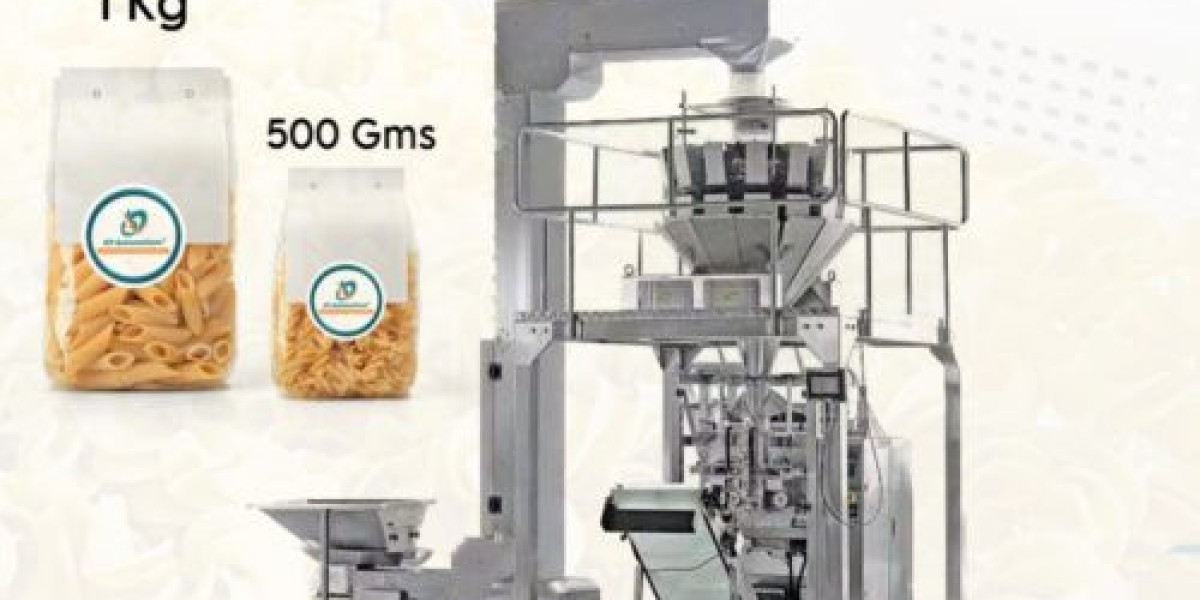

The modern pasta industry is moving toward faster, cleaner, and more automated manufacturing processes. For businesses producing pasta at commercial or industrial scale, choosing the right pasta machine can influence production consistency, operating efficiency, product quality, and long-term business growth. A well-designed system can streamline essential stages while giving manufacturers greater control over their final products.
KP AUTOMATIONS provides pasta processing solutions for manufacturers looking to establish new production facilities or improve existing operations. With suitable equipment, businesses can develop a structured production workflow that supports consistent output and accommodates changing market requirements.
What Is a Pasta Machine?
A pasta machine used for commercial production is designed to process prepared dough into specific pasta shapes through controlled extrusion and forming. Unlike small-scale equipment intended for household or artisanal use, industrial machinery is built to operate continuously and handle substantially larger production requirements.
The production process generally involves preparing the dough, feeding it into the extrusion system, forcing it through a selected die, and cutting or shaping the emerging pasta. Depending on the configuration, the process can then continue toward drying, cooling, conveying, and packaging.
For manufacturers, the objective is not simply to produce pasta quickly. Consistency in dimensions, texture, appearance, and production output is equally important.
Why Choosing the Right Pasta Machine Matters
Every pasta manufacturer has different requirements. A business producing a limited range of products may need a different configuration from a large factory serving distributors, retailers, or export markets.
Production capacity is one of the first considerations. The machine should be capable of meeting current requirements without creating unnecessary production limitations. At the same time, businesses planning expansion should consider whether their selected equipment can support future growth.
Product variety is another important consideration. Manufacturers producing multiple pasta shapes need suitable dies and a configuration that allows efficient product changeovers.
How a Modern Pasta Machine Supports Production
Modern pasta processing equipment can bring several stages together into a coordinated workflow. Prepared dough enters the machine and is processed under controlled conditions before being extruded through the appropriate die.
Precision extrusion helps maintain the desired dimensions and shape. Cutting mechanisms then create consistent lengths for short-cut products, while suitable downstream equipment can manage subsequent drying and handling.
The level of automation depends on the production line configuration. More automated systems can reduce repetitive manual work and provide greater control over production parameters.
Automation in Commercial Pasta Manufacturing
Automation has become increasingly important for manufacturers seeking to improve productivity. An automated production system can reduce dependence on manual intervention and create greater repeatability between batches.
An automatic pasta machine can be integrated with other equipment so that different stages operate as part of one production workflow. This can include extrusion, cutting, conveying, drying, cooling, and packaging.
For high-volume manufacturers, this coordinated approach can help reduce production bottlenecks and improve the utilization of factory resources.
The Importance of Pasta Drying
Extrusion is only one part of producing stable, shelf-ready pasta. Freshly shaped pasta contains moisture that must be reduced under controlled conditions before packaging and storage.
A suitable drying system manages temperature, airflow, and humidity according to the requirements of the product. Controlled drying helps reduce the risk of cracking, deformation, and uneven moisture distribution.
Integrating drying equipment with the pasta production process can also reduce unnecessary handling between manufacturing stages and support a more continuous workflow.
Supporting Different Pasta Products
One of the advantages of properly configured industrial pasta equipment is its ability to support product diversification. Different dies and production configurations can allow manufacturers to produce a range of pasta formats.
Depending on the equipment selected, manufacturers may produce products such as macaroni, penne, fusilli, shell pasta, spaghetti, vermicelli, and other specialty varieties.
This flexibility can help businesses respond to changing consumer preferences without requiring a completely separate manufacturing facility for every product type.
Hygiene and Machine Construction
Food-processing equipment must support hygienic manufacturing practices. Materials, machine accessibility, cleaning procedures, and maintenance requirements all influence the suitability of equipment for commercial food production.
Food-grade stainless-steel construction is widely used for industrial processing equipment because it provides durability and supports cleaning requirements.
A machine should also be designed so that operators can access relevant components for inspection and routine maintenance. Good maintenance practices can help reduce unexpected downtime and extend equipment service life.
Evaluating the Investment
The purchase of a pasta machine should be evaluated as a long-term production investment. Initial equipment cost is important, but it should not be the only consideration.
Manufacturers should assess production capacity, automation, energy consumption, maintenance requirements, spare-part availability, product flexibility, and technical support.
A machine that delivers reliable output over an extended operating period may provide greater business value than a lower-cost system that requires frequent intervention or limits future expansion.
Why KP AUTOMATIONS?
KP AUTOMATIONS provides machinery solutions for commercial and industrial pasta manufacturers. The company focuses on practical engineering, automation, food-grade construction, and production systems designed around individual manufacturing requirements.
Its solutions can support businesses establishing new pasta production facilities as well as manufacturers seeking to upgrade or expand existing operations.
KP AUTOMATIONS also provides technical assistance to help businesses evaluate machinery according to production capacity, product requirements, factory configuration, and future expansion plans.
Company Information
KP AUTOMATIONS
G.B D-372, D Block, Sector 10, Noida, Uttar Pradesh – 201301
Phone: +91-9310738142
Email: kpautomations372@gmail.com
Website: https://pastamachines.in/
Planning a Future-Ready Pasta Production Facility
A successful pasta manufacturing operation requires more than individual machines. Equipment should be planned as a complete production system in which each stage supports the next.
Manufacturers should consider how raw materials will be handled, how dough will be processed, how products will be shaped and dried, and how finished pasta will ultimately be conveyed and packaged.
This approach can help businesses create a more efficient factory layout while allowing room for future capacity increases and product diversification.
Conclusion
The right pasta machine can provide the foundation for efficient and consistent commercial pasta manufacturing. From controlled extrusion and shaping to integration with drying, conveying, and packaging equipment, modern machinery allows manufacturers to build streamlined production workflows.
For businesses evaluating equipment, the most suitable solution depends on production capacity, product range, automation requirements, factory conditions, and long-term growth plans.
KP AUTOMATIONS offers pasta processing solutions for manufacturers seeking dependable equipment and scalable production capabilities. Businesses planning a new pasta facility or upgrading an existing line can contact KP AUTOMATIONS to discuss their requirements and identify an appropriate machinery configuration.
FAQs
What is a pasta machine used for in industrial production?
A pasta machine processes prepared dough through controlled extrusion, shaping, and cutting to create consistent pasta products for commercial production.
Can a pasta machine produce different shapes?
Yes. Depending on the machine configuration and available dies, manufacturers can produce different pasta shapes and formats.
Why is automation important in pasta manufacturing?
Automation can reduce repetitive manual work, improve consistency, and allow different stages of production to operate as a coordinated system.
What should manufacturers consider before purchasing pasta machinery?
Production capacity, product variety, automation, factory space, energy requirements, maintenance, hygiene, spare parts, and future expansion should all be evaluated.
Does KP AUTOMATIONS supply pasta production equipment?
Yes. KP AUTOMATIONS provides pasta machinery and related production solutions for commercial and industrial food manufacturers.
How can I contact KP AUTOMATIONS?
You can contact KP AUTOMATIONS at +91-9310738142 or kpautomations372@gmail.com, or visit its website at https://pastamachines.in/.