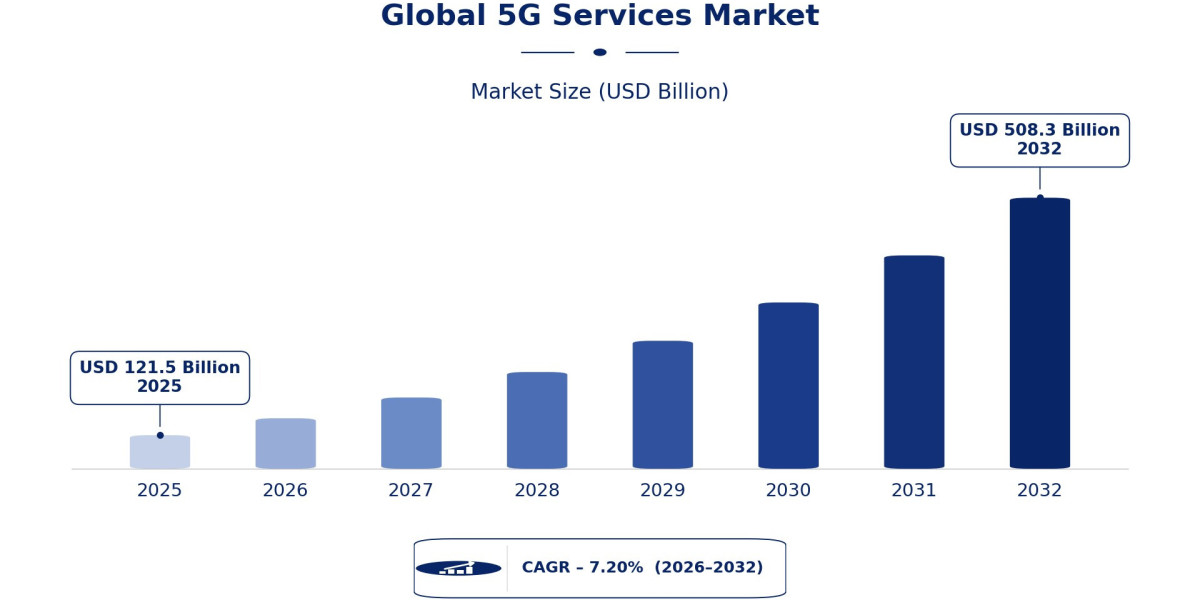

The 5G Services Market is increasingly important to the development of connected factories and industrial automation. Manufacturing facilities are adopting robots, sensors, machine vision, automated guided vehicles, and cloud-based production systems. These technologies require dependable connectivity, making wireless networks an increasingly important component of industrial infrastructure.
The Connected Factory Is Taking Shape
A modern factory can contain thousands of machines and sensors.
Each device may generate information about production speed, equipment condition, quality, energy consumption, or inventory.
5G can connect these devices and provide a communication layer between machines, workers, edge platforms, and cloud systems.
Machine Communication
Industrial automation depends on communication between machines.
Robots may need to exchange information with production systems, while sensors continuously provide updates about operating conditions.
5G can support these connections without requiring every device to rely on physical cables.
This wireless flexibility can be particularly valuable in factories where production layouts change frequently.
Predictive Maintenance
Unexpected equipment failure can disrupt production and increase costs.
Connected sensors can monitor machinery for unusual vibration, temperature, pressure, or operating patterns.
Data can then be analyzed to identify potential problems.
When combined with AI and edge computing, 5G connectivity can support faster communication between machines and analytics systems.
Automated Guided Vehicles
Factories and warehouses are increasingly using autonomous or semi-autonomous vehicles to move materials.
These systems need continuous communication with control platforms and other equipment.
5G can provide connectivity for:
- Autonomous mobile robots
- Automated guided vehicles
- Smart forklifts
- Warehouse robotics
- Connected production equipment
Machine Vision
Industrial cameras are becoming increasingly important for quality control.
High-resolution video can generate large amounts of data, making network capacity important.
5G can support wireless transmission of video from production environments to edge or cloud systems for analysis.
Private Industrial Networks
Private 5G networks are particularly relevant to industrial environments because companies may want dedicated connectivity for critical operations.
A private network can be designed around a specific factory's requirements, including device management, security, coverage, and application performance.
This creates an opportunity for telecommunications companies to offer customized industrial solutions.
The Role of Low Latency
Some industrial applications require rapid communication.
For example, automated systems may need to respond quickly to sensor information or machine commands.
URLLC is designed around applications requiring very reliable and low-latency communication, making it relevant to industrial automation.
6Wresearch identifies URLLC as one of the faster-growing 5G communication segments over the forecast period.
Barriers to Adoption
Industrial organizations need to consider several factors before implementing 5G.
These include:
- Existing network infrastructure
- Cybersecurity
- Equipment compatibility
- Investment requirements
- Workforce training
- Integration with industrial software
Successful deployment therefore requires coordination between telecom providers, manufacturers, technology vendors, and industrial operators.
The Industrial Future
The combination of 5G, AI, robotics, digital twins, IoT, and edge computing could create increasingly autonomous industrial environments.
5G will not independently create smart factories, but it can provide connectivity that helps these technologies communicate.
As manufacturing becomes more digital, reliable wireless infrastructure could become an increasingly important competitive consideration.
Who We Are
About 6Wresearch: 6Wresearch is a commercial strategy and growth advisory firm founded in 2011 and headquartered in New Delhi, India, with partners across Southeast Asia and the Middle East & Africa. The firm has delivered over 20,000 commercial engagements for over 2,000 organizations, including Fortune 500 companies, government agencies, and multilateral institutions such as the World Bank and the Asian Development Bank. Backed by proprietary market research and advanced analytics, 6Wresearch combines sector expertise with data-driven intelligence to help organizations navigate market complexity and drive sustainable growth. These capabilities explain why organizations trust 6Wresearch Global Market Research & Consulting Firm for reliable commercial insights and confident decision-making.
Our Proprietary Platform: 6W Export GTM
6W Export GTM is 6Wresearch's proprietary trade intelligence and go-to-market platform, built on UN Comtrade data and enhanced with 6Wresearch's in-house analytical and simulation models, including system dynamics-based forecasting. Unlike broad, sector-level market sizing tools, 6W Export GTM operates at the individual product level down to specific HS codes and micro-segments to identify precise, actionable export opportunities by country and product pair, including markets where trade currently does not exist. This granular, simulation-driven approach allows 6W Export GTM to surface opportunities that sector-wide analysis typically misses, positioning it among a small number of platforms globally offering this depth of product-and-country-specific export intelligence.