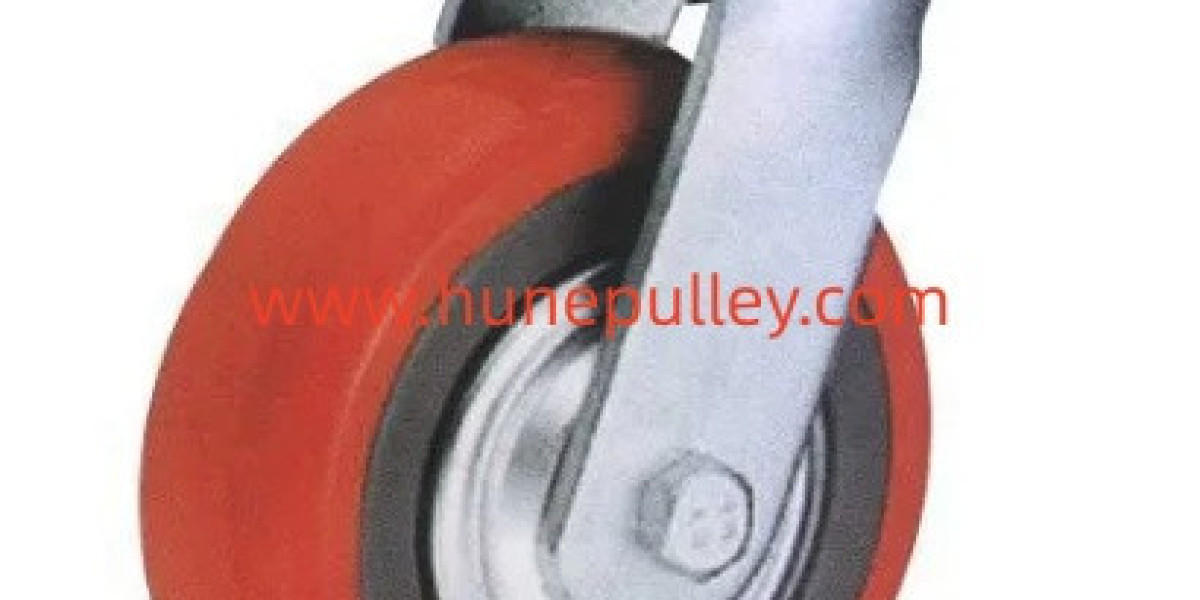

Behind many convenient mechanical systems are compact components that quietly support movement and daily functionality. A Roller Wheel from Hunepulley offers furniture manufacturers, hardware distributors, and equipment designers a practical component solution for applications requiring guided motion and controlled rolling. Although relatively small in structure, this type of component can influence how an assembled product moves, interacts with surrounding parts, and performs during regular use.
Roller design begins with understanding the mechanical environment. Some wheels are intended for furniture drawers, while others are incorporated into sliding doors, storage systems, conveyor arrangements, or industrial equipment. Each application involves different requirements concerning dimensions, contact surfaces, mounting structures, and operating conditions. Selecting a suitable design therefore requires more than comparing external appearance.
Material selection is an important part of this process. Metal, nylon, POM, and other engineering materials are used in roller production according to their respective characteristics. Metal components may be considered where structural support is required, while engineering plastics can offer useful properties such as manageable weight, corrosion resistance, and particular friction characteristics. The appropriate material depends on the intended application and the surrounding components.
Wheel geometry also deserves attention. The outer diameter, width, groove profile, and central opening determine how the wheel interacts with a track, shaft, or supporting structure. Flat wheels are used in certain guided arrangements, while V-shaped and U-shaped profiles accommodate different track designs. Matching the wheel profile with the corresponding contact surface helps maintain the intended movement direction.
The internal structure can influence operating characteristics as well. Some designs incorporate bearings to support rotation, while others use alternative mounting arrangements. Bearing dimensions, shaft compatibility, and component positioning should be considered together during product selection. When these elements are correctly matched, the assembled mechanism can operate according to its intended design.
Manufacturing precision is another important consideration. Molding, machining, material preparation, and finishing procedures all contribute to the final component. Dimensional consistency helps ensure that wheels correspond with their specified mounting arrangements and surrounding hardware. Appropriate inspection procedures can also help identify surface irregularities or dimensional differences before finished products enter the supply process.
Noise and movement smoothness are relevant considerations in many applications. In furniture systems, users may prefer drawers and sliding panels that move without unnecessary disturbance. In mechanical equipment, stable rolling behavior can contribute to predictable operation. Wheel material, bearing condition, track alignment, and installation quality all influence these characteristics. Regular cleaning and inspection can help maintain suitable operating conditions.
For wholesalers and product manufacturers, having access to different roller configurations can simplify product development and purchasing decisions. Businesses may require different materials, mounting dimensions, groove profiles, or customized structures according to their projects. Clear technical drawings and application descriptions help suppliers understand these requirements and discuss suitable manufacturing arrangements.
Product consistency also contributes to long-term cooperation. Buyers often consider specification clarity, packaging arrangements, component identification, and communication throughout the ordering process. Organized product information makes it easier to compare models and coordinate inventory. For distributors, this information also supports clearer communication with their own customers.
As furniture and equipment designs continue to incorporate sliding structures and guided movement systems, roller components remain relevant across various product categories. Their practical value comes from matching wheel geometry, material properties, and mounting arrangements with the requirements of each application. Careful selection can help manufacturers develop coordinated assemblies while supporting convenient everyday operation.
A smooth movement system often starts with a component that deserves a closer look. Visit https://www.hunepulley.com/product/ and browse the available hardware solutions. Take a moment to examine the product details, consider different design possibilities, and discover a useful starting point for your next furniture or mechanical project.